Share This

Showing posts with label EUGENE MAHALINGAM. Show all posts

Thursday, April 23, 2026

Mixed property outlook amid higher oil prices

 High-rise and luxury segments seen most vulnerable
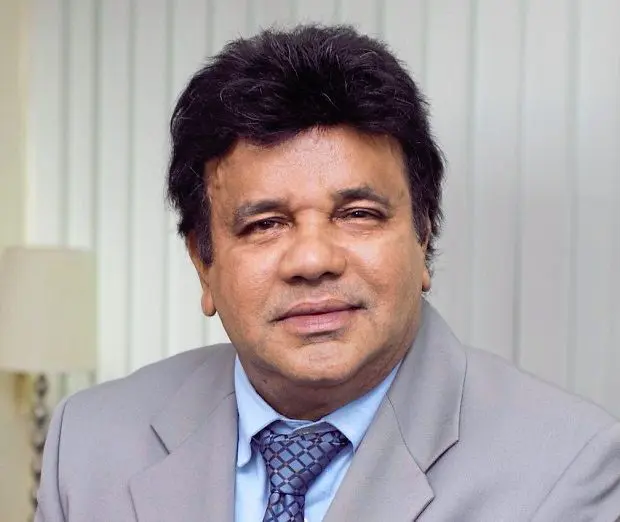
PPC International MD Datuk Siders Sittampalam

PETALING JAYA: Malaysia’s property market remains an appealing investment avenue despite increasing global uncertainties, according to industry experts.

PPC International Sdn Bhd managing director Datuk Siders Sittampalam said the local property market remains attractive to investors despite the ongoing West Asia crisis.

“However, the appeal is likely to be selective rather than broad-based, with investment decisions increasingly adopting a sector-led approach.

“It is important to recognise that Malaysia’s property market continues to be driven largely by domestic fundamentals, rather than direct exposure to the Middle East,” he told StarBiz.

An analyst said investing in property during global economic uncertainty “still makes sense,” adding, however, that it is “no longer about riding a broad market upswing”.

“It’s about selectivity, resilience, and long-term thinking. Property remains attractive because it’s a tangible, income-generating asset.”

Amid uncertain times, he said investors often value “stability.”

“Real estate can provide relatively predictable rental income and act as a partial hedge against inflation. Compared to more volatile assets like equities, it tends to be less reactive to short-term global shocks.”

However, he said the current environment has changed the investment outlook.

“Higher construction costs, cautious lending and more price-sensitive buyers mean that not all properties will perform well. Oversupply in certain segments, especially high-density developments, can limit both rental yields and capital appreciation.

“At the same time, global uncertainties can affect job markets and consumer confidence, indirectly impacting demand,” he said.

Compared with many countries in the region, Siders noted that Malaysia’s political neutrality provides a degree of stability.

“As such, the crisis is expected to affect the market only indirectly, primarily through higher oil prices, inflationary pressures and shifts in investor sentiment.

“One key reason the market remains attractive is that, during periods of geopolitical uncertainty, investors tend to rotate away from volatile equities into hard assets such as real estate.”

Siders emphasised that property, particularly income-producing assets, is generally less sensitive to short-term volatility affecting equities and other financial instruments.

“That said, the principal risk lies in a prolonged period of elevated oil prices, which could translate into higher domestic transportation costs, increased steel and concrete prices, pressure on rental affordability and slower take-up rates for high-end residential properties.”

Collectively, Siders said these factors may erode household disposable income and temper overall market momentum.

“In my view, investment strategies should now be anchored on income generation and strong underlying fundamentals, rather than expectations of capital appreciation or speculative gains.”

One market observer said that in times of uncertainty, the key question isn’t whether to invest, but rather “how to invest.”

“Investors should focus on properties with strong fundamentals – good locations, access to infrastructure, proximity to employment hubs and realistic pricing.

“Rental demand is especially important now, as steady income can offset slower price growth. A longer investment horizon also becomes critical, since quick gains are less likely in a cautious market cycle.”

Amid current economic uncertainties, a property analyst said there would be an impact on the market should things escalate further or be prolonged.

In such a situation, he said the impact would vary depending on the property segment. He said high-rise condominiums, especially in Kuala Lumpur, would be the most vulnerable segment.

“This segment would be the hardest hit because buyers here are often investors or middle- to upper-income earners.”

He noted that this segment also tends to be more sensitive to economic uncertainty, rental yields and short-term sentiment.

“Should oil prices spike, investors here will likely pull back and there will be fewer speculative purchases.

“The number of expatriates would also shrink if the global economy slows. Moreover, rental demand for these types of properties could also soften.”

Ultimately, this could lead to slower price growth or stagnation for high-rise condominiums.

“There would be higher unsold inventory. This is already an issue for condominiums within the Klang Valley,” he said.

Similarly, luxury and high-end properties are also at high risk, he noted.

“This segment is highly dependent on foreign buyers and investor sentiment.

“Oil price spikes often come with global uncertainty, which reduces foreign inflows and makes buyers more cautious. In such situations, transactions within this segment could drop significantly and prices may stagnate or correct.”

On the flip side, he said affordable houses (or mass-market properties) would be the most resilient if global economic conditions continue to worsen.

“This segment holds up better because it is driven by genuine need for owner occupation rather than investment.

“It is also often supported by government schemes and financing access. Even if oil prices push up living costs, people still need homes.

“Demand may slow slightly, but the segment still remains relatively stable. Prices may still inch up, albeit more slowly.”

Nevertheless, higher oil prices equals higher fuel costs, he noted. “Therefore, commuting can become more expensive.

“In such cases, locations far from city centres may see reduced appeal, while well-connected areas (especially ones near mass rapid transits and light rail transits) will hold their value better.”    

By EUGENE MAHALINGAM eugenicz@thestar.com.my

Wednesday, May 4, 2022

Malaysia's 1Q18 to 4Q21 GDP performance, International scenario likely to affect trajectory

CLICK TO ENLARGE

International scenario likely to affect trajectory

“Hopefully we will start to see private investments gaining traction, but this depends very much also on what is going on in the international front, especially in terms of the Russia-ukraine war and global inflation.” Carmelo Ferlito

Despite being on a recovery path, the country’s economic growth trajectory could be affected by uncertainties on the global front. 

PMalaysia’s gradual and controlled easing of Covid-19 restrictions as it transitions into edemicity is set to give the country’s economy a much needed boost.

Despite being on the recovery path, economists have however cautioned that Malaysia’ economic growth trajectory could still be affected by uncertainties on the global front.

Malaysia University of Science and Technology professor Geoffrey Williams said the ongoing Russia-ukraine war, China’s lockdowns and likely austerity in the United States and Europe are key factors that could have an impact on Malaysia’s gross domestic product (GDP) growth.

“The expected negative outlook of the international economic scenario will determine the outcome of Malaysia’s second quarter GDP, not Covid-19 and borders reopening, which we expect to play a marginal role in this phase,” he told Starbiz.

In a base case scenario (which refers to a set of basic assumptions where the results would lead to the most realistic outcome), Williams said Malaysia’s second quarter GDP is forecast to increase 1.3% quarter-on-quarter and 2.6% year-on-year.

“This scenario implies that the GDP will be flat over the first half of 2022. This is in contrast to the consensus view of a rampant recovery with a yearly growth figure close to 5.5% and 6%. In our base scenario, we think that a 3.5% year growth is more likely.” 

 Malaysia University of Science and Technology professor Geoffrey Williams said the ongoing Russia-Ukraine war, China’s lockdowns and likely austerity in the United States and Europe are key factors that could have an impact on Malaysia’s gross domestic product (GDP) growth.Malaysia University of Science and Technology professor Geoffrey Williams said the ongoing Russia-Ukraine war, China’s lockdowns and likely austerity in the United States and Europe are key factors that could have an impact on Malaysia’s gross domestic product (GDP) growth.

In a risk scenario, Williams said he foresees Malaysia’s GDP “going into slightly negative territory”.

“In our base scenario, we expect to see a systematic and progressive recovery, consistent with the potential rate of growth of the economy only in the second half of 2022.

“The contribution of the external demand is expected to be close to zero, reflecting the international cyclical weakness we are already observing in the US, European Union and China,” he said.

Malaysia, which has been gradually easing its Covid-19-related standard operating procedures since late last year, finally reopened its borders to international travellers from April 1.

Last week, Health Minister Khairy Jamaluddin announced a slew of relaxations to Malaysia’s Covid-19 restrictions.

Centre for Market Education chief executive officer Carmelo Ferlito said the relaxation measures announced recently would be a good incentive for the tourism industry.

However, he said the impact of the relaxations would likely be better reflected in the third quarter of this year, rather than in the current (second) quarter.

“We can still expect a good momentum for export, pulled by a weaker currency (which is temporarily good for export but harmful for the economy in general).

“Hopefully we will start to see private investments gaining traction, but this depends very much also on what is going on in the international front, especially in terms of the Russiaukraine war and global inflation.”

Malaysia’s GDP expanded 3.1% in 2021, after posting a 3.6% year-on-year growth in the fourth quarter of last year.

In a base case scenario, HELP University economist Dr Paolo Casadio said Malaysia’s first quarter 2022 GDP is projected to shrink 1.5% quarter-on-quarter and contract 0.7% year-on-year

Centre for Market Education chief executive officer Carmelo Ferlito said the relaxation measures announced recently would be a good incentive for the tourism industry. 

Centre for Market Education chief executive officer Carmelo Ferlito said the relaxation measures announced recently would be a good incentive for the tourism industry.

“This would be due to contraction in investments, negative net external demand and stagnation in private consumption.

“We do not see a clear pattern in private consumption and investments, which would be consistent with a positive transition of the economy toward a systematic and sustained recovery.”

Casadio added that the current phase of recovery is “a delicate transition”.

“There are plenty of weaknesses and risks of a new recessionary phase, although the risk of a recession is only around 25%. Disposable income and wealth among households are not recovering due to weak real wages growth, slow increase in employment and continuing withdrawals from the Employees’ Provident Fund to finance current expenditure, even among the middle-income population.”

Ferlito, meanwhile, said he was “not a big fan of GDP forecasts” when asked about his projections for Malaysia’s economic performance for the first quarter of 2022.

“It’s because they fail to ignore how an eventual growth or decline is built. For example, GDP grew in 2021 by 3.1%, but that growth was mainly driven by government spending and private consumption.

“This means that growth is resting on very unstable pillars, being basically financed by household and government debt and inflation.”

Ferlito emphasised that private investments remained “quite stagnant” in 2021.

“The key drivers of a sustainable growth path are savings, which are not measured by GDP and private investments. “I think that beyond the GDP figure, which in itself is pretty useless, we should look at the microfoundations behind it. We will be on the right path if private investments grow, while a closer look should also be devoted to the savings dynamics, which is not captured by the GDP.”Ferlito noted that Bank Negara foresees a good rebound in private investments for 2022.

“This is what we need to hope for, although I believe that a lot of elements of uncertainty are still weighing on that, in particular for the first quarter of 2022.”

Ferlito said the political situation in Malaysia could also have an impact on the country’s GDP performance.

“Hopefully we will have elections with the emergence of a strong majority supported by a reformist agenda. Then there is the big issue of China, which in 2021 accounted for 15.5% of Malaysian exports. China is Malaysia’s first trade partner and therefore their utopic approach to Covid-19 will surely have an impact on our economy.”

Ferlito added that geopolitical uncertainties in Europe could also have an impact on Malaysia’s economic performance.

“Europe accounts for around 7% of the international trade of Malaysia, both in terms of import and export. Troubles there will lead to repercussions here.”

Williams said the focus at the moment should be on price stability and maintaining expansionary credit conditions.

“The government has managed the containment of inflation well up to now, through the control of petrol and other prices. But it was an error to allow the hike of the electric tariffs for the non-residential users in March. This is adding perhaps 0.5% to the outlook of inflation in a very critical phase.”

Williams said this hike should be reversed to guarantee a low level of inflation, which is necessary to support the purchasing power of salaries.

“This would be possible by redistributing the gains and costs of the increase in oil and gas that the different government-linked companies are experiencing and avoids penalising firms and households.”

Casadio meanwhile said he expects Bank Negara to maintain the current expansionary conditions and not revise the official interest rate of the monetary policy until the second half of 2022. 

 Source link.